Sign up to my newsletter HERE to get a free book

Langwick Green
Cosy Mystery Series
Langwick Green is the sort of village people imagine when they think of England.
A village green and church. A manor house beyond old gates. A river winding past the marina. Familiar
faces behind shop counters. Neighbours who have known one another for decades.
It is also a village where people notice everything—and understand rather less than they believe.
When death disrupts the careful rhythms of village life, Arthur Ellison, his daughter Helen, and granddaughter
Ellie find themselves drawn into mysteries that reveal the hidden pressures beneath an apparently peaceful
community. Old loyalties, quiet fears, misunderstood intentions and long-kept secrets all have their part to play.
These are mysteries about people rather than villains, about communities rather than conspiracies, and
about the stories villages tell themselves when faced with difficult truths.
Warm, observant, gently humorous and unmistakably British, the Langwick Green Mysteries explore what
happens when ordinary people make extraordinary mistakes—and how a community learns to live
with the consequences.
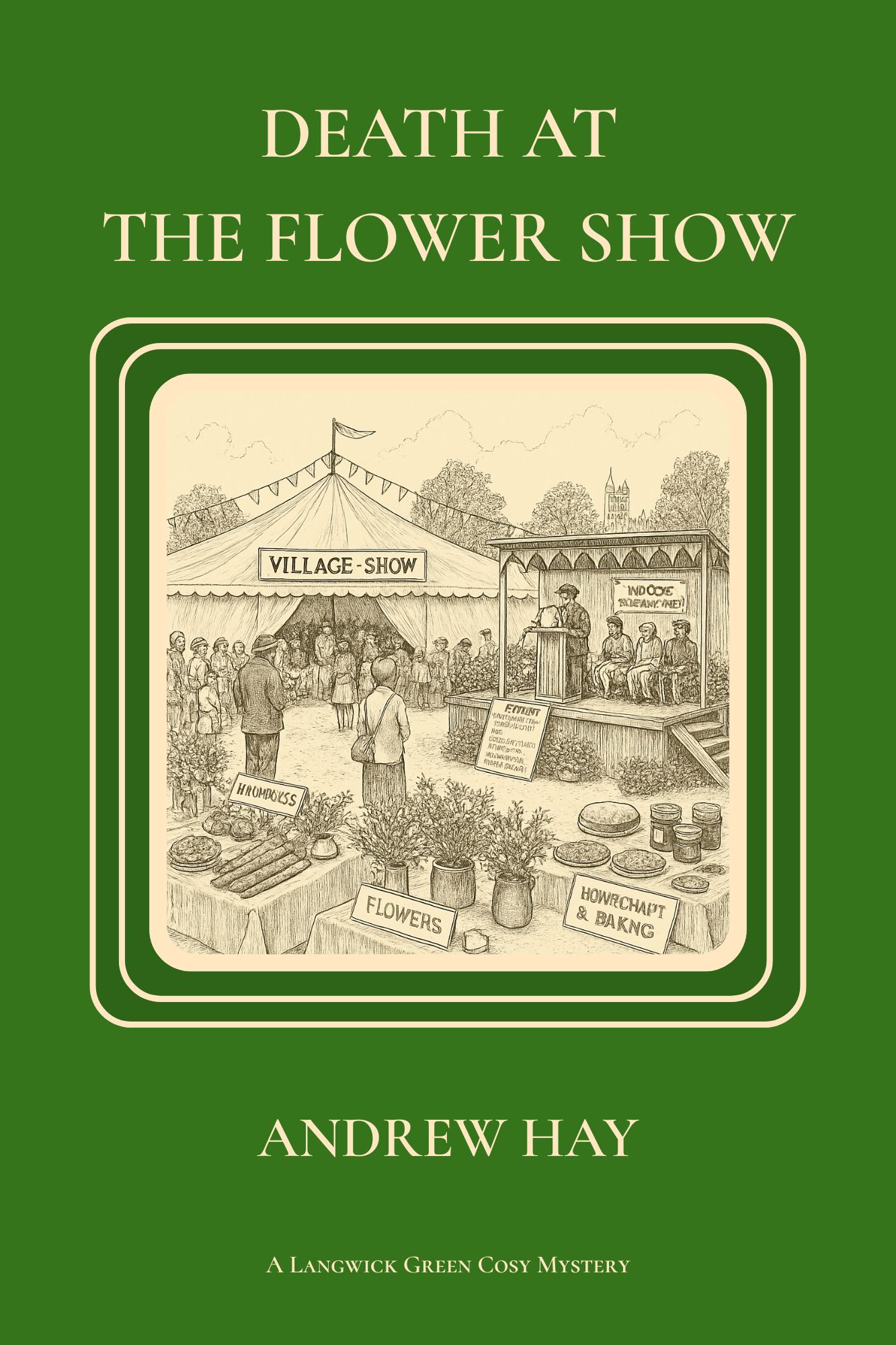
Death At The Flower Show
Book 1 in the series
In a village that values certainty, a quiet death reveals how dangerous it can be to stop noticing the people who hold everything together.
Langwick Green is the sort of village people admire from the outside: orderly, prosperous, and quietly confident in its traditions. When the Annual Flower & Crafts Show opens on the village green, everything appears exactly as it should.
Until the cook from Langwick Hall fails to step forward to collect her prize.
Ellen Wilkins was reliable, kind, and unremarkable in the way that suggests permanence. Her death shocks the village — but not into chaos. Instead, Langwick Green does what it does best: it settles on an explanation, reassures itself, and moves on.
Arthur Ellison, his daughter Helen, and his granddaughter Ellie are not investigators. They don’t accuse, interrogate, or disrupt. They listen. They notice. And they become increasingly uneasy as certainty settles too neatly around the wrong story.
As Ellen’s absence begins to strain the quiet systems she once held together, the village is forced to confront an uncomfortable truth: some crimes are born not of hatred or greed, but of fear — and of how easily communities stop seeing the people they depend on most.
A gentle, intelligent village mystery about belonging, responsibility, and the cost of looking away, Death At The Flower Show introduces Langwick Green — a place that survives not because it is perfect, but because it learns.
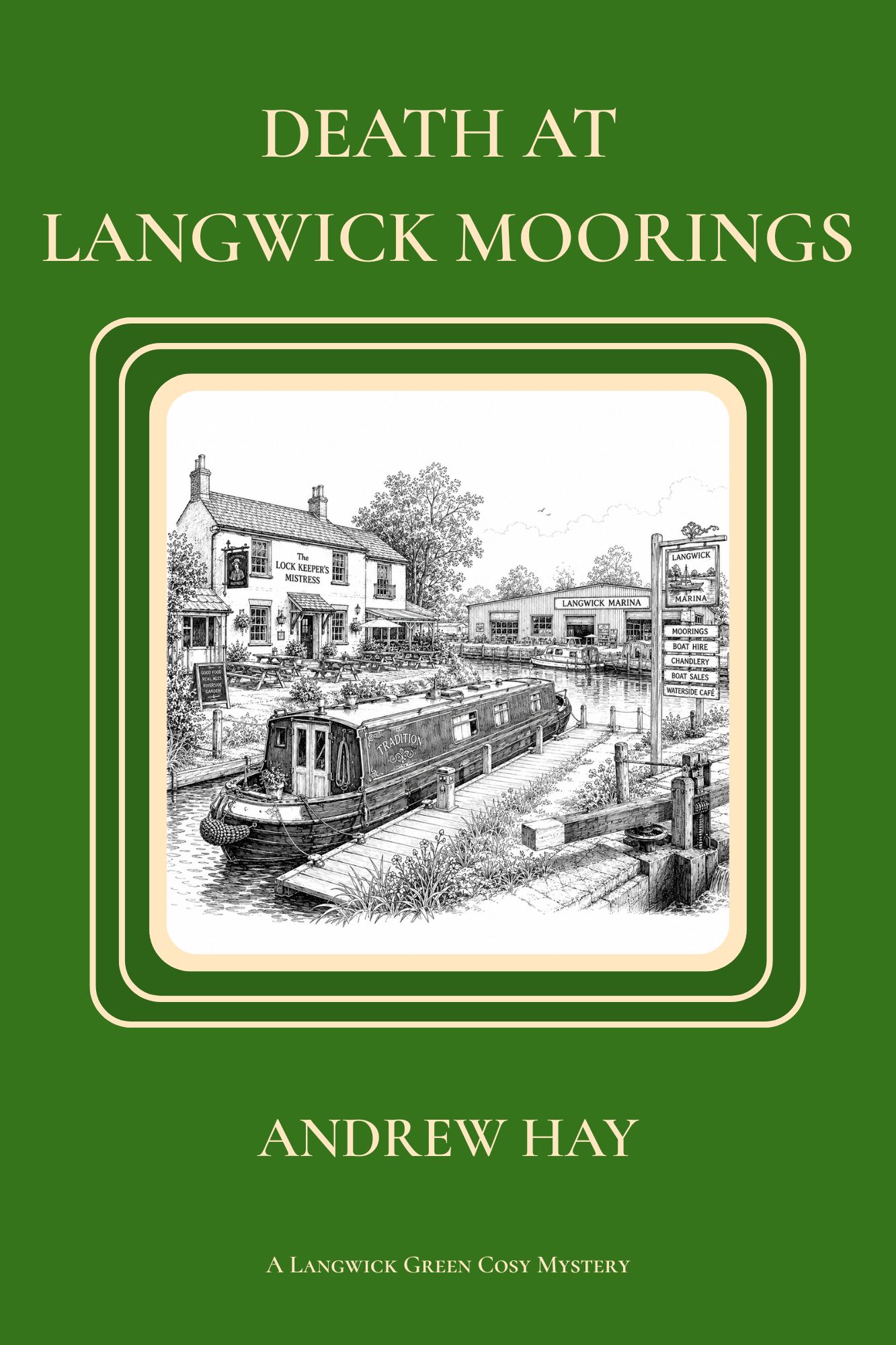
Death At Langwick Moorings
Book 2 in the series
A death at Langwick Green Marina looks like an accident—until the Ellisons notice something missing in their model village. And in Langwick Green, small imbalances rarely stay small.
Langwick Green is a village that prides itself on balance.
So when a visitor dies quietly aboard his boat at the marina, the explanation is accepted with relief: a faulty heater, a tragic accident, nothing more. The police close the file. The village moves on.
But in the Ellison garden, the model village tells a different story.
Arthur Ellison has spent years maintaining the miniature Langwick Green that sits behind his cottage. It has never been meant as more than a hobby. Yet from time to time the tiny village shifts in subtle ways that reflect tensions in the real one.
This time, something is missing.
A visitor’s mooring has vanished from the model harbour.
As Arthur, his daughter Helen, and his perceptive granddaughter Ellie begin to look more closely, a troubling possibility emerges. The dead man—Jim Carter—did not return to Langwick Green by accident. He came back with a purpose: to clear his name after a scandal that forced him to leave the village decades earlier.
And someone knew it.
In Langwick Green, reputations matter. Old stories are rarely questioned. And the most dangerous people are often the ones who believe they are simply protecting the village.
Quietly, patiently, the Ellisons begin to place the truth where it cannot be ignored.
But in a place built on politeness and long memory, exposing the past can be more unsettling than the crime itself.
Because in Langwick Green, justice doesn’t arrive with noise.
It arrives with balance.
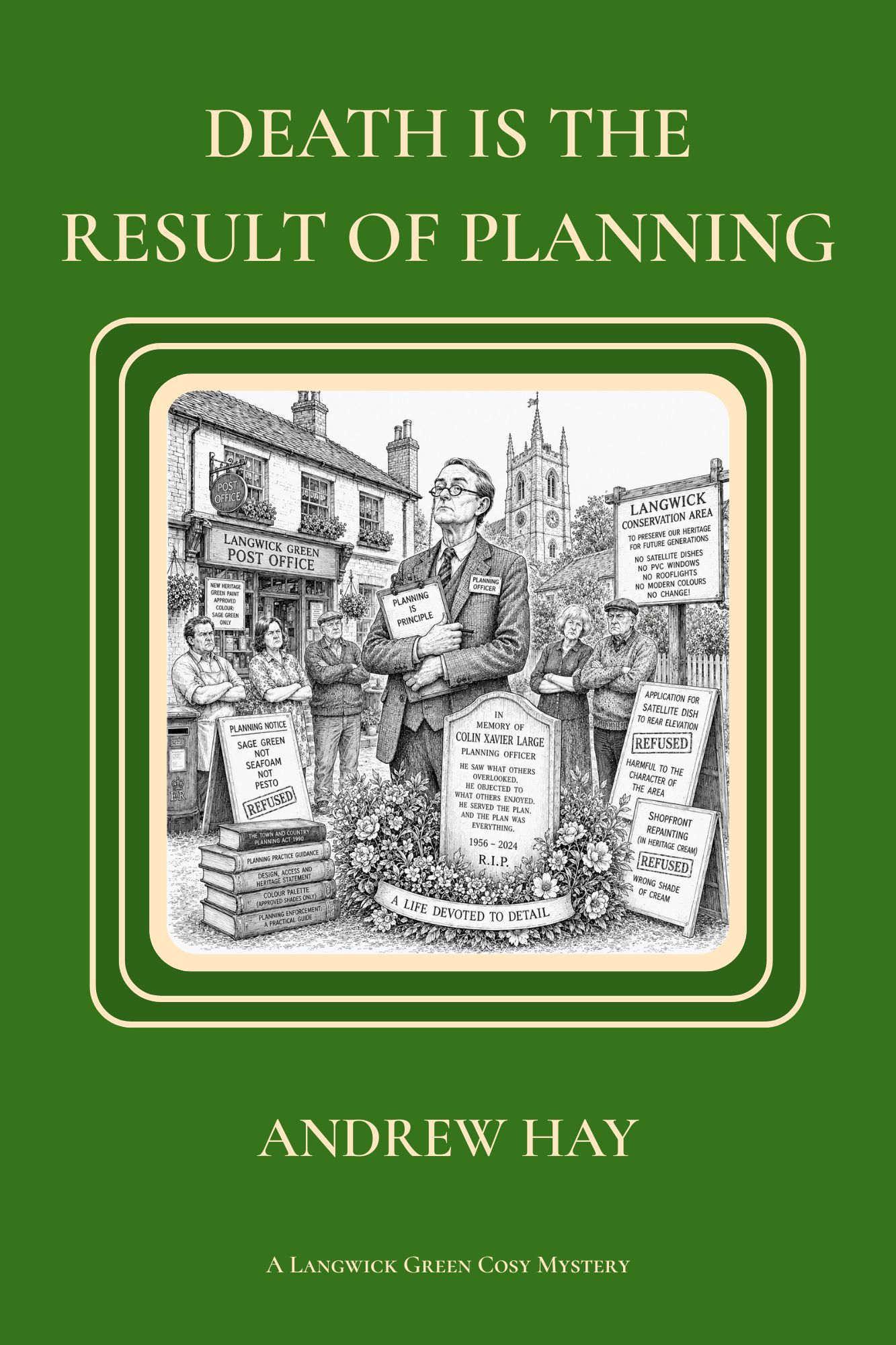
Death Is The Result Of Planning
Book 3 in the series
A rigid planning officer tries to force Langwick Green to obey the rules.
The village resists quietly—until one argument goes too far.
Langwick Green is a village that runs on tradition, patience, and the occasional cup of tea.
Then Colin Large arrives.
As the new planning officer, Colin believes rules exist to be followed—no exceptions. Satellite dishes must go. Shopfronts must be repainted. Café tables must disappear from the pavement. Even Arthur Ellison’s beloved model village open day falls under his scrutiny.
Technically, Colin is always correct.
But Langwick Green has never been a place that responds well to being corrected.
As the months pass, tensions quietly build across the village. Shopkeepers grumble. Neighbours compare notes. And Colin’s wife, Judith, finds herself caught between a husband who refuses to bend and a community slowly losing its patience.
Then one evening an argument at home goes tragically wrong.
When the case reaches court, the question is not who caused Colin’s death.
The real question is why.
And the answer may lie in the quiet ways a village protects its own.
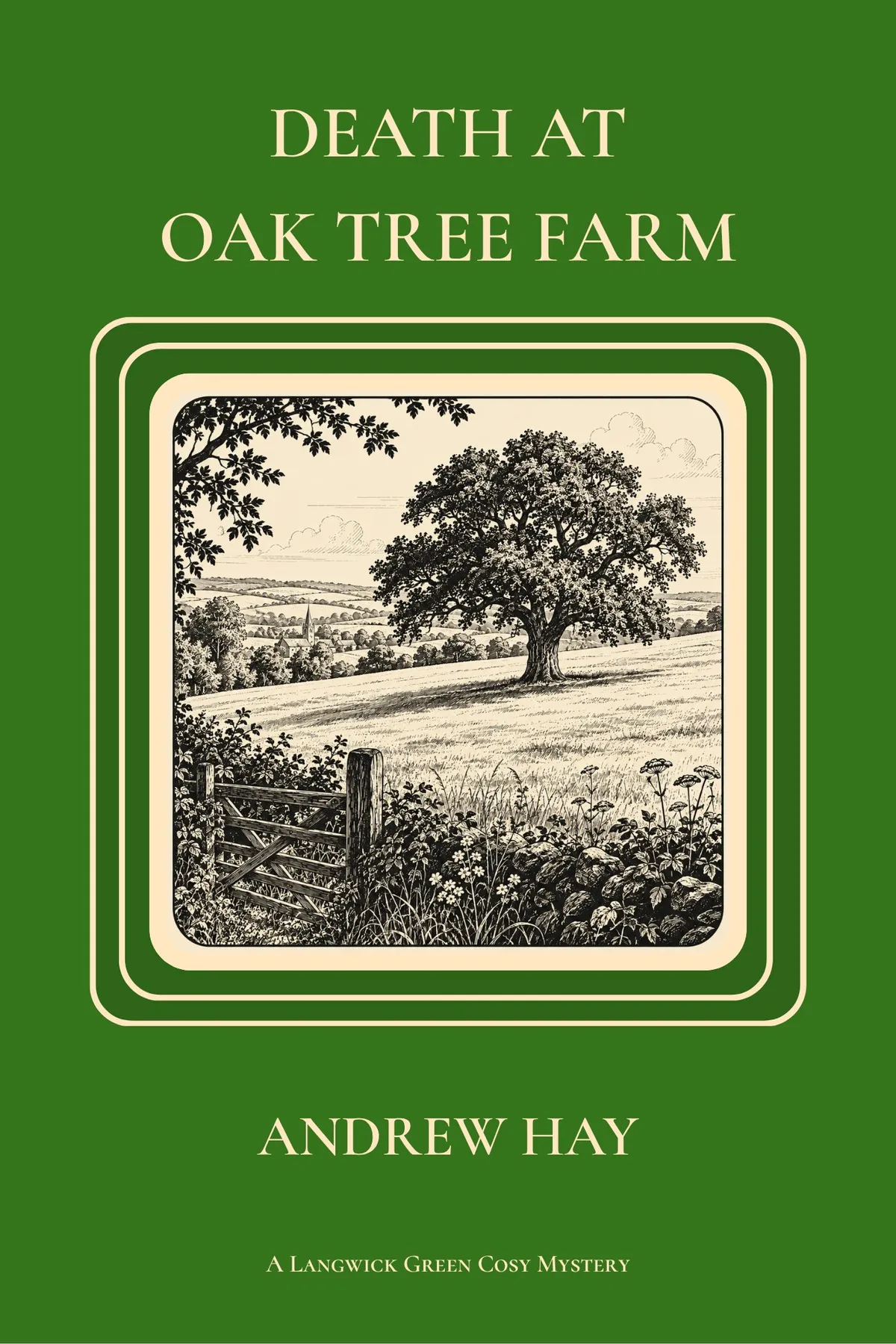
Death At Oak Tree Farm
Book 4 in the series
When a respected farmer is found dead beneath an ancient oak, Langwick Minor accepts suicide—until Arthur Ellison’s model village suggests the truth lies buried in a disputed field.
Late summer in Langwick Minor should be a peaceful time. The harvest is approaching, the fields lie golden beyond the village, and Peter Harwood of Oak Tree Farm is preparing for a well-earned retirement.
But when Harwood is found dead beneath the great oak that marks the boundary of his land, the police quickly rule the tragedy a suicide.
Most of the village accepts the explanation.
Arthur Ellison does not.
In his garden, Arthur studies the miniature landscape of his model village. Something about the fields north-east of Langwick Minor refuses to settle. When his daughter Helen uncovers a decades-old land arrangement involving the disputed field known as Higher Oak, the Ellisons begin to realise that Harwood’s death may not be as simple as it first appeared.
The truth lies buried in old estate records, forgotten agreements between neighbouring farmers, and a boundary that was meant to tidy the land—but may instead have destroyed a man’s future.
As quiet questions ripple through the village, Arthur and his family discover how easily a moment of desperation can turn a lifetime’s work into tragedy.
Because in Langwick Minor, land rarely changes hands.
But when it does, the consequences can be deadly.